
 USA
 Canada
 Brazil
 Germany
 France
 Italy
 Switzerland
 Sweden
 Spain
 Great Britain
 Norway
 Russia
 South Africa
 New Zealand
 Australia

Summer riding brings heat, sweat, and the constant temptation to strip down to minimal gear for comfort. But safety does not stop when the temperature rises. Perforated motorcycle leather offers a practical answer to a real rider problem: how to stay cool without sacrificing the abrasion resistance and impact protection that protective gear provides. Whether you ride a sportbike on the track, commute through city traffic, or tackle long highway miles, understanding how perforated leather works helps you make smarter choices about your protective apparel.
Quick Answer
Perforated motorcycle leather features small, strategically placed holes that allow air to flow through the material while maintaining its protective qualities. This design lets riders stay cooler during warm-weather riding without losing the abrasion resistance of solid leather. Perforated gear works best for moderate-speed street riding and track days where ventilation matters more than maximum weather protection. For high-speed riding or cold conditions, solid leather remains the stronger choice.
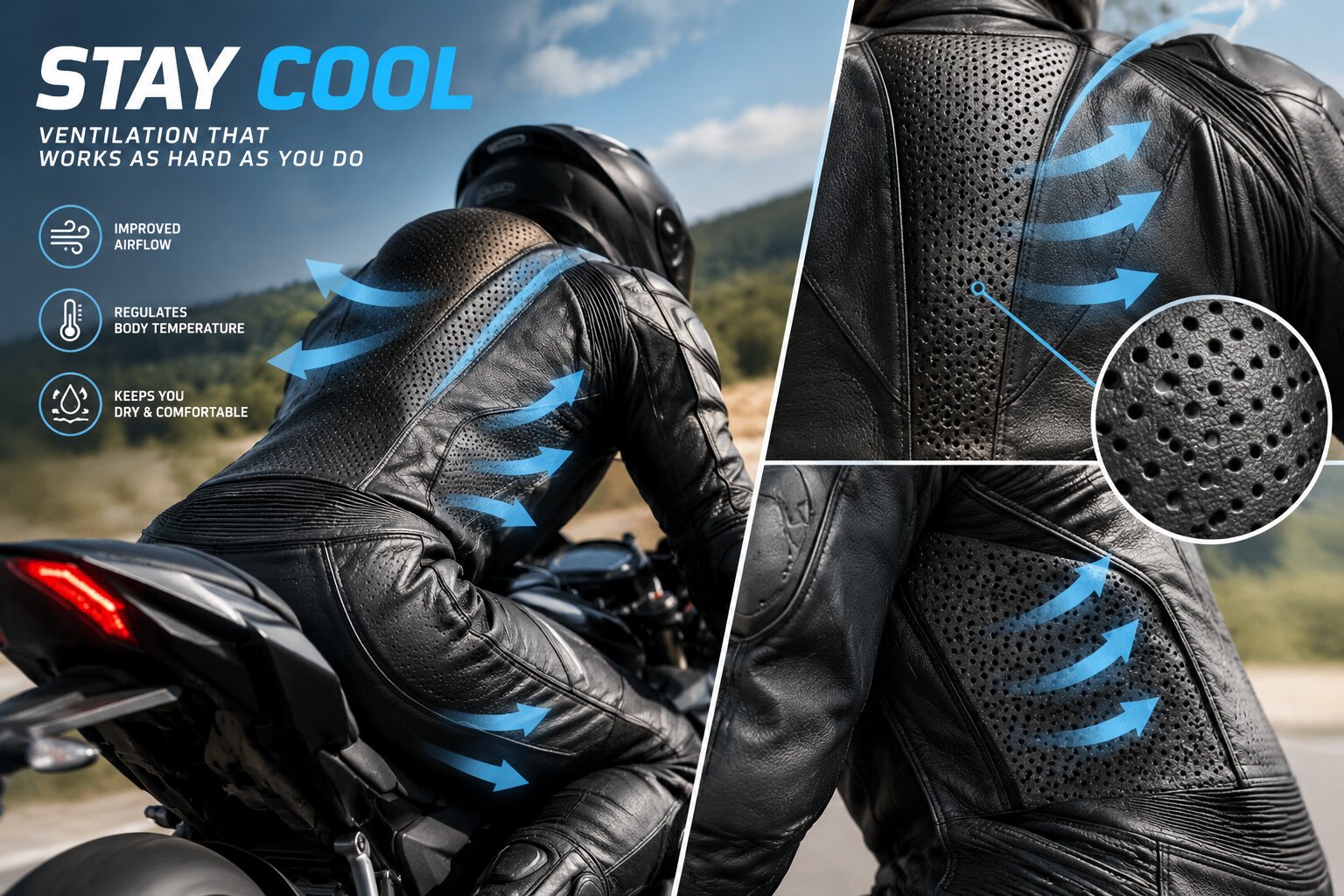
Table of Contents
- What Perforated Leather Means for Rider Comfort and Safety
- How Ventilation Works in Perforated Gear
- Understanding the Protection Trade-Offs
- When to Choose Perforated Leather for Your Riding
- Fit, Airflow, and Protective Performance
- Common Mistakes Riders Make With Perforated Gear
- What to Check Before Buying Perforated Motorcycle Leather
What Perforated Leather Means for Rider Comfort and Safety
Perforated motorcycle leather is solid leather with small holes punched or cut into high-heat areas of a jacket, suit, or gloves. The holes are not random. They are placed in zones where riders generate the most body heat: the back, shoulders, chest, and inner thighs. Solid leather remains in impact zones like elbows, knees, hips, and shoulders where abrasion resistance matters most during a slide.
This hybrid approach lets you breathe better in summer heat while keeping the abrasion-resistant coverage that protects your skin during a crash. Perforated leather still meets EN 17092 standards for garment classification if the underlying leather quality and seam strength meet the standard's requirements. The holes do not automatically lower your protection rating, but they do change how the gear performs in different riding scenarios.
How Ventilation Works in Perforated Gear
Air moves through perforated leather in two ways: passive airflow and active ventilation. During city riding or lower-speed street riding, wind pressure naturally pushes cool air through the holes. On a track day or highway ride, increased speed creates stronger airflow that pulls heat away from your body. This passive cooling effect reduces sweat buildup and core body temperature without requiring you to unzip vents or remove layers.
The cooling benefit depends on riding speed, outside temperature, and humidity. A commuter moving through traffic at moderate speeds gets less airflow benefit than a track-day rider pushing 80+ mph. In still air or during slow-speed urban riding, perforated gear cools better than solid leather but does not match the ventilation of mesh jackets with large open panels.
Perforated leather also dries faster than solid leather after rain or sweat. If you ride through a summer downpour, water drains through the holes instead of soaking into the material. This feature matters for riders who spend hours in the saddle during warm months.
Understanding the Protection Trade-Offs
Ventilation comes with a trade-off: the holes reduce material density in certain areas. Solid leather offers more consistent abrasion resistance across the entire garment. Perforated leather maintains strong protection in reinforced zones but has lower abrasion resistance in perforated areas. This means the protection you get depends heavily on how you crash and which part of your body makes contact with the road.
In a low-speed slide on your hip or elbow, solid leather in those reinforced zones protects you well. In a higher-speed slide where your back or side takes impact, the perforated sections offer less abrasion resistance than solid leather would. Neither choice removes crash risk, but each makes different trade-offs.
Weather protection also changes. Solid leather sheds water better and provides more wind resistance during cold-weather riding. Perforated leather lets water and cold air pass through. If you ride year-round or in variable weather, you may need different gear for different seasons rather than relying on one perforated suit for all conditions.
When to Choose Perforated Leather for Your Riding
Perforated motorcycle leather suits track-day riders, sportbike riders, and summer commuters best. If you ride a supersport on the track during warm months, perforated leather keeps you cooler without forcing you to wear mesh gear that offers less abrasion protection. If you commute through city streets in summer heat, perforated jackets and suits let you stay safer and more comfortable than riding in minimal gear.
Long-distance highway riders benefit from perforated gear on hot days. The airflow reduces fatigue from overheating during multi-hour rides. Riders who take track days occasionally but ride the street most of the year often choose perforated suits as a middle ground between full protection and maximum ventilation.
Solid leather remains the better choice for cold-weather riding, high-speed highway touring, and riders who want maximum abrasion resistance in all zones. If you ride year-round or in variable conditions, you may prefer solid leather for versatility and consistent protection.
Fit, Airflow, and Protective Performance
Fit affects how well perforated gear cools you. A suit that is too loose traps dead air and reduces airflow. A suit that is too tight restricts movement and body heat cannot escape. Custom-fitted perforated leather works better than off-the-rack sizing because the garment stays close to your body without binding, allowing air to flow through the perforations efficiently.
Armor placement also matters. If your back protector shifts during a ride, the perforated areas lose some protection value. Riders who want to choose perforated leather should invest in a suit with secure armor pockets and a fit that keeps armor in place during hard riding. Check that CE-certified armor sits correctly and does not move when you lean forward on the bike.
Riders who want to compare related Leather Collection protective gear can explore
for options built around fit, protection, and riding use.Common Mistakes Riders Make With Perforated Gear
The biggest mistake is assuming perforated leather works like mesh. Mesh jackets have large open panels that maximize ventilation but offer lower abrasion resistance overall. Perforated leather maintains solid protection in key zones while improving airflow. They are not equivalent, and riders who need maximum protection should not substitute mesh for perforated leather if abrasion resistance is a priority.
Another mistake is buying perforated gear for all-season riding. Perforated leather in winter or rain-heavy climates leaves you exposed to cold and wet conditions. Riders in variable climates should own both perforated and solid gear, or choose solid leather for year-round versatility.
Riders also overlook maintenance. Perforated leather needs regular cleaning because dirt and moisture can accumulate in the holes. A quick wipe after each ride and periodic deep cleaning with leather conditioner keeps the material supple and extends gear life. Inspect the stitching around perforations regularly, as seams in those areas can wear faster with frequent airflow and flex.
What to Check Before Buying Perforated Motorcycle Leather
Check the EN 17092 classification on the label. A perforated suit can still be AA or A rated if the underlying leather and seams meet the standard's abrasion, tear, and seam strength requirements. The holes do not automatically lower the rating. Ask the manufacturer or seller what rating the suit holds and where the perforations are located.
Verify armor certification. Make sure any CE-certified armor in the suit is rated under EN 1621 and is correctly positioned in impact zones. Perforated leather does not affect armor performance, but you want to confirm that protection is included and properly installed.
Test the fit. Perforated gear must fit well to work correctly. Try on the suit and move through your normal riding position. Check that armor stays in place when you lean forward and that the fit does not restrict shoulder or elbow movement. If you ride a sportbike or race bike, the fit should match your on-bike posture, not your street-standing posture.
For riders comparing a real gear example,
shows how construction, fit, and protective features can work together.Ask about materials. High-quality perforated leather starts with strong base leather. The thickness and grade of the leather matter more than the number or size of holes. Thicker leather with smaller, well-spaced perforations typically offers better protection than thin leather with large holes.
FAQs: Perforated Motorcycle Leather
Does perforated motorcycle leather offer the same protection as solid leather?
Perforated leather offers strong protection in reinforced zones but lower abrasion resistance in perforated areas. The protection you get depends on where you crash and how your body contacts the road. Solid leather provides more consistent abrasion resistance across the entire garment. Both can be rated AA or A under EN 17092 if the underlying leather quality and seam strength meet the standard. Neither choice removes crash risk entirely.
How much cooler is perforated leather compared to solid leather?
Cooling benefit depends on riding speed, temperature, and humidity. At higher speeds (track days, highway riding), perforated leather cools significantly better than solid leather. At lower speeds or in still air, the cooling difference is less noticeable. Mesh gear cools more than perforated leather, but perforated leather offers better abrasion protection than mesh.
Can I wear perforated leather gear in winter or rain?
Perforated leather is not ideal for cold weather or heavy rain because water and cold air pass through the holes. Solid leather sheds water better and provides wind resistance. If you ride year-round, consider owning both perforated and solid gear, or choose solid leather for versatility across seasons.
Do the holes in perforated leather weaken the seams?
Seams around perforations can experience more stress due to airflow and flex. Quality perforated gear uses reinforced stitching in these areas. Check the stitching regularly during maintenance and inspect for wear. If seams show signs of damage, have the gear serviced or replaced to maintain protection.
What is the difference between perforated leather and mesh gear?
Perforated leather is solid leather with small holes added to specific areas, maintaining abrasion resistance in impact zones. Mesh gear uses open fabric panels that maximize ventilation but offer lower overall abrasion protection. Perforated leather works better for riders who prioritize abrasion protection with improved cooling. Mesh suits riders who need maximum ventilation and accept lower abrasion resistance.
How should I maintain perforated motorcycle leather?
Clean perforated gear after each ride with a soft cloth to remove dirt and moisture from the holes. Use leather conditioner periodically to keep the material supple. Inspect stitching around perforations regularly for signs of wear. Store the gear in a cool, dry place away from direct sunlight. After a crash, inspect the gear for damage and have it serviced or replaced if the leather or seams are compromised.
Is perforated leather good for track-day riding?
Yes, perforated leather is well-suited for track days. The cooling benefit helps during intense riding in warm conditions, and the reinforced zones provide strong abrasion protection in common crash areas. Make sure the suit fits your on-bike posture, armor is correctly positioned, and the EN 17092 rating meets your safety standards.
Conclusion
Perforated motorcycle leather solves a real problem for riders who want to stay cool without sacrificing protective coverage. By combining solid, reinforced leather in impact zones with ventilated perforations in high-heat areas, this design helps reduce the temptation to ride in minimal or unsafe gear during hot weather. The trade-off is lower abrasion resistance in perforated zones and reduced weather protection compared to solid leather.
The right choice depends on your riding style, climate, and priorities. Track-day riders, sportbike riders, and summer commuters benefit most from perforated leather. Riders in cold climates or who ride year-round may prefer solid leather for consistent protection and weather resistance. Whatever you choose, proper fit, correct armor placement, regular maintenance, and realistic expectations about crash risk matter more than any single material or design feature.
If you are ready to explore perforated motorcycle leather options or compare it with solid gear, Leather Collection offers custom-fitted protective suits and jackets built for real riders who understand that staying safe and staying comfortable are not separate goals. Start with your riding style, then find the gear that matches your needs.